
AI & Automation
What you can build yourself in a week or two, what you cannot, and where OpenClaw + MCP stops being a production UA agent.

25 min
11 sections
Web
Table of contents

Tanya Leonova
Go-to-Market, Plurio
A chat that can pull ads data is a prototype. A production performance agent needs real data, coded rules, and guardrails before it touches budget.
Introduction
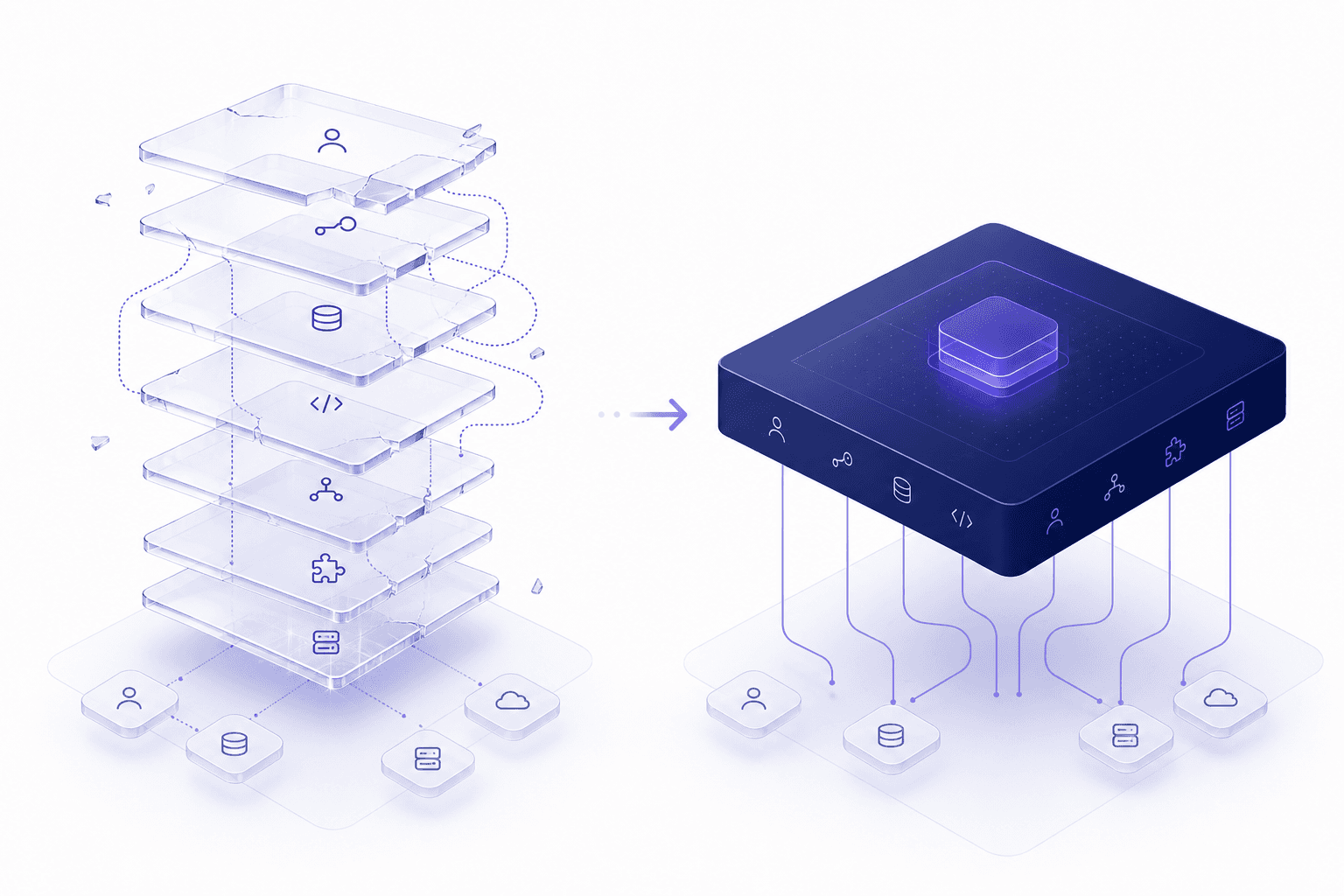
Teams wire Claude Code or OpenClaw to Meta with MCP, get a chat that can pull ads data, and think they already have a production performance agent.
They do not. They have a prototype.
This ebook draws a clean line between DIY (OpenClaw / Claude Code + MCP) and a production UA agent. It is honest about what you can ship yourself. It is also honest about what needs real data, coded rules, and guardrails before you let anything touch budget.
Proof. We use what we hear on calls (~38% “we’ll build it on Claude Code,” ~70% of time stuck in manual analysis), a Meta safety research pass we ran for ManyChat (including Parallel), and product lessons from teams like TripleTen.
Key takeaways
OpenClaw + MCP is a prototype. It is not a UA operating system.
At chat insights, Plurio and DIY look the same. The gap opens with skills + ML + coded rules + approve gates.
DIY can ship useful work in 1-2 weeks. Cascades, LTV predict, verification, and safe autopilot usually need a team for months.
Documented Meta bans track to unsafe setup (raw tokens, unofficial connectors, writes with no human approve). Not to “using the API” or “using AI.”
Score your stack with the 10-question checklist. Under 5 yes answers = still a prototype.
1. Two products people keep mixing up
People hear “agent.” They see a chat that can call tools. They assume they already have production UA automation.
They do not. These are two different products.
DIY (OpenClaw / Claude Code + MCP) | Production agent (Plurio) | |
|---|---|---|
What it is | A shell: chat + tools + skills | An operating system for UA |
Data | The ad account / whatever you connect | Full funnel: spend → lead → LTV, 2+ years of history |
Decisions | Prompt + LLM reasoning | ML + cascaded rules + verification |
Actions | Can press a button in the ad account | Approve → autopilot, with an audit log |
Trust signal | “It seems smart” | “10/10 recommendations we would have accepted ourselves” (TripleTen) |
Cost of a mistake | Real money in Meta | Preview + gates before autopilot |
Main point: OpenClaw is excellent for experiments. It does not replace methodology, data, and guardrails.
Think of it this way. OpenClaw is like Cursor for marketing. Great for a prototype. You do not put a prototype into production when one wrong event mapping can burn $5K overnight.
2. What you can honestly build on OpenClaw + MCP
Be fair to DIY. A lot of useful work is reachable without a full product.
What you can ship in about 1-2 weeks
Ad-hoc account analysis (“show ad sets with ROAS under 80%”)
Creative / brief generation
One-off budget reallocation ideas
One simple rule (stop if CPA > X)
What you cannot assemble well without a team for months
Predict LTV on day 0 for stop / scale
Cascaded rules (CPM → CTR → CPC → qualified lead → predict LTV)
A verification step before the action hits the account
Day-of-week normalization and creative burnout detection on history
One shared decision logic across five country owners
Safe autopilot with an audit trail
If your demo stops at chat insights from data and context, you are not behind Plurio yet. At that layer we are not different from Claude Code or OpenClaw.
The gap opens when you turn on skills we build, ML models, and real automation. That is a different level than most self-built stacks.
3. Where chat parity ends
Skills and a team that builds them
Production is not a clever prompt. It is a team that creates skills and writes rules.
A rule is code. Deterministic. It runs without model failures and without hallucinations.
To get something similar in DIY, a marketing manager has to:
ask an internal developer, or
write the code themselves, or
vibe-code it and hope it holds.
Most marketers know their product. They are not automation experts. You can assemble a basic level that works for a while. That is useful. It is also usually built next to a full-time job, so it stays half-finished.
A dedicated automation service that rebuilds the process will almost always do this better than a marketer bolting MCP on after hours.
Example skill: creative threshold
A common learning cycle: you spend about $200 testing a creative for one or two weeks before you feel safe to stop or scale.
With statistical threshold analysis, teams can spot an inflection earlier. In one framing we use, that threshold can sit around $30 instead of waiting for the full ~$200 cycle. Turning a loser off earlier is a large saving when you repeat it across creatives.
You do not get that skill at volume if automation is a side quest. It has to be a real project, not a weekend MCP experiment.
Speed vs building it in-house
Even if you have martech, in-house can be slow.
Week | What you have with Plurio |
|---|---|
Week 1 | Agent deployed |
Week 2 | You can use the agent in chat; skills start to appear |
Week 3 | Working machine: presets, skills, deterministic rules |
In-house often needs six months minimum. Pieces of automation can take years.
4. Two layers DIY does not close
(The source outline named three layers. Only two were defined. This ebook stays with those two.)
Layer 1: Data (not the LLM)
The ad account shows one picture. CRM shows another. Without one source of truth, the agent optimizes the wrong thing.
Fragmented dashboards and Excel exports show up on calls. They are real. They are not always the sharpest pain. The sharper pain is the hours of manual work those fragments create. Removing that work matters more than another dashboard lecture.
Layer 2: Methodology (not a prompt)
Killing a creative early is not “$80 spent, 0 leads.”
A cascade looks more like: CPM → CTR → CPC → CPL → predict → day-of-week → burnout trend.
That is ML plus code. It is not “ask Claude.”
5. Meta bans: what the research showed
We did this research for a ManyChat-related safety talk. It is one of the cleanest answers to “why not just automate Meta with Claude Code / OpenClaw / random MCP?”
We did not trust one search or vendor blogs. The same brief went through three engines: our own deep-research pass, Parallel (broad web + official docs), and Grok for X coverage. Claims were cross-checked. Vendor posts without primary sources were dropped.
What we found
The evidence base is small and consistent.
After Reddit (r/FacebookAds, r/PPC, r/ClaudeAI), X, forums (BlackHatWorld, Hacker News, automation communities), non-English ad communities, and Meta’s own docs, we found:
No evidence that using the Marketing API, or “using AI,” causes bans by itself.
Bans track to a specific unsafe setup.
The anti-pattern behind every documented case
Raw personal or admin tokens instead of a registered app with scoped credentials
Unapproved or dev-mode apps, or creating a developer app on the business’s own identity
Autonomous agents writing to the API with no human approve, retrying hard on errors
Unofficial third-party connectors
First-hand reports we could verify
Source | What happened |
|---|---|
Cas Smith (@casglb), X, Mar 2026 | Whole 16-year account banned after Claude + unofficial MCP with a personal-use token |
Jacob Posel (@jacob_posel), X, Mar 2026 | Banned after creating a Meta developer app on the business’s own identity |
Reddit (r/FacebookAds / r/ClaudeAI), 2026 | Ad account permanently disabled after wiring Claude Code straight to the API |
Make.com community, Oct 2024 | Restricted for automation “mimicking human actions” |
BlackHatWorld, Sep-Oct 2024 | Flagged with Meta’s “automation that doesn’t follow our rules” message |
Meta Developer Community | Disabled after creating campaigns via the API without a paused status |
Expert commentary pointing at the same pattern (context, not counted as cases): Taylor Holiday on needing an approved app; Cody Schneider on unofficial MCP plus a dev-mode token.
What we did not find
Zero documented cases of a ban spreading from an ad account to a separate Page, Instagram, WhatsApp, or chatbot as contagion from an isolated ad account. Where whole-portfolio bans happened, assets sat under one identity or Business Manager.
Zero documented cases where rule-based automation through official channels, with a human approve step, triggered enforcement.
What Meta’s own docs confirm
Rate-limit hits cause temporary throttling (about 60-300 seconds), not a ban. Meta even caps ad-set budget changes at four per hour and blocks the rest.
Meta supports rule-based automation (Ad Rules Engine and native Automated Rules).
Scoped System User tokens are Meta’s documented path for unattended production automation.
On April 29, 2026, Meta launched official AI Connectors: MCP server + CLI for Claude and ChatGPT via Business OAuth. Official channels are now a sanctioned path.
The factor that separates every banned account
In every documented case, a human did not approve the write before it hit the API. Often the connection was unofficial or used a raw token.
That is why “we automated with MCP and got banned” shows up on Threads and X. It is a fair objection. Not everyone can set this up safely.
6. How Plurio avoids each trigger
Keep this table next to you when someone says “AI automation will ban us.”
Risk in the documented cases | What Plurio does |
|---|---|
Raw personal / admin tokens | Registered Marketing API app with scoped System User tokens |
Unofficial / unregistered connectors | Official channels only |
No human gate on writes | Every action shown for confirm before it runs; no autonomous writes until the team opts in per pattern |
Unpredictable agent actions | Every write comes from a coded rule, not a free-form model decision |
Aggressive retries / high-frequency writes | Actions run at the rule cadence, not in loops |
Advantage+ campaigns | Those run on Meta’s own AI; Plurio rules focus on Standard campaigns |
Rules move to auto-execute only after the team has validated the pattern. Google Search first. Meta when the team is ready.
One question before Meta automation goes live: do your ad account, Page, pixels, and chatbot sit under the same Business Manager and identity, or are they separated? Ask your Meta partnership team early.
7. The typical team path
This is the pattern we see. Not a morality tale.
Stage | What happens |
|---|---|
Week 1 | “Let’s connect OpenClaw to the Meta API.” Wow, it works. |
Week 2 | First ad-hoc analysis. You save about two hours. |
Week 3 | The agent clicks the wrong thing. About −$3K. |
Week 4 | “We need a human watching it.” DIY becomes another job. |
Month 2 | Rules live in ChatGPT / Gemini (TripleTen-style). It works. It does not scale. |
Month 3 | “Maybe we buy something ready?” (paths we have seen with teams like Nexters, and operators like Ihor / Rooh) |
Takeaway: DIY is not a dead end. It is a normal stage. The real question is how many months, and how much burned budget, you are willing to spend on that stage.
8. When DIY makes sense
DIY is a good idea if you are early
If you are early, go use Claude Code and OpenClaw. Automate. Learn from mistakes. That is useful. You will arrive later knowing what you actually want when budgets grow.
DIY also fits when:
You have strong eng + UA in the same room
The job is an experiment, not production
You can spend a couple of months debugging guardrails
DIY is not scalable without a martech function treating it as a real project. Even with martech, in-house can take longer than a product team that does this every week.
DIY gets risky when spend and complexity jump
The riskier audience for this ebook: teams already spending seriously (think $300K+/mo), across geos and products, who still think they can rebuild a full production agent on OpenClaw alone.
DIY is a poor fit when:
You run multiple geos / products at meaningful spend
The funnel is long (LTV shows up in 30-60 days)
Compliance is strict
The team is already drowning in Excel between Power BI and ad accounts
You need a working system in weeks, not a quarter
We are not writing this to shame early teams. We are writing it so high-spend teams stop treating a prototype shell like an operating system.
9. Checklist: ready for real budget?
Answer yes / no. Marketing can turn this into a quiz later.
Does the agent see LTV / predict, not only ad-account metrics?
Is there attribution down to creative with backend data?
Are rules deterministic code, or a prompt?
Before an action hits the account, is there preview + approve?
Is there an audit log for “why we stopped this”?
Are day-of-week / seasonality handled in alerts?
Can one person explain stop / scale logic to a new UA?
Does the agent avoid mixing up optimization events?
Is there a check of what happened 3 days after an action?
Does the team trust it enough to turn on autopilot for decrease?
10. What to do this week
Practical close. Not a pitch.
Do not throw away OpenClaw. Use it for ad-hoc analysis and creative research.
Do not enable autopilot on increase until decrease has been proven for 2-3 weeks.
Write down your stop / scale logic. If it only lives in someone’s head (the Rooh-style risk), put it on paper.
Start with one workflow (creative burnout or budget reallocation), not “an agent for everything.”
Count TCO: eng hours + burned budget + opportunity cost vs a ready agent.
11. Closing
A good performance marketer in 2026 is not the person who clicks Ads Manager fastest.
It is the person who:
knows which decisions can be automated, and which cannot
builds a system instead of living in Excel
can tell an MCP demo from production on real budget
The UA role does not disappear tomorrow (claims that it does tend to overshoot). The role changes: less manual analysis, more decision architecture, more trust in a system you can audit.
Tanya Leonova
Go-to-Market, Plurio
Tanya Leonova leads GTM at Plurio. Ex performance marketer. Writes about DIY agents vs production UA systems, Meta safety, and what actually ships under real budget.

More ideas for better growth
Get new performance marketing guides in your inbox.
Subscribe